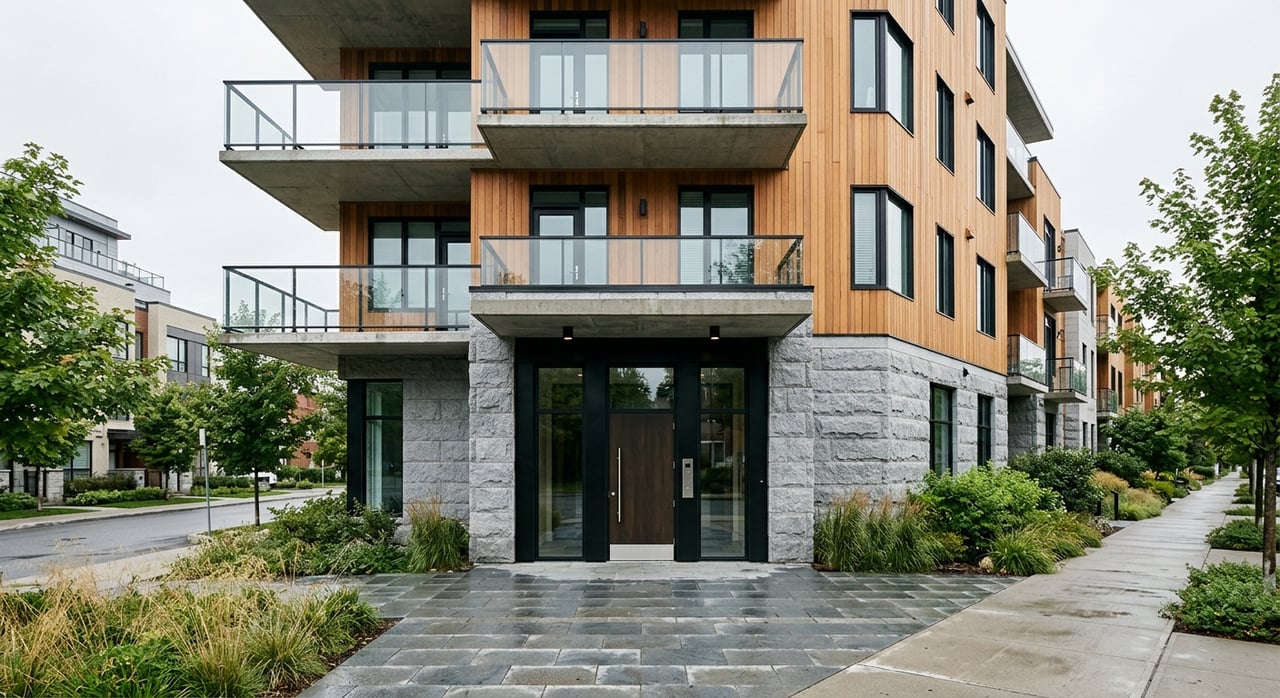
Aspen Condo vs House: How to Choose the Right Fit
May 28, 2026
May 28, 2026
Trying to choose between a condo or a home in Aspen? In this market, the answer is rarely just about price. You are likely weighing lifestyle, upkeep, rental goals, and how you want to spend your time when you are in town. This guide will help you compare the tradeoffs clearly so you can make a more confident decision. Let’s dive in.
In Aspen, condos are often the lower-cost entry point, but both property types still sit firmly in the luxury category. According to Aspen’s year-to-date town report through April 2026, the median sales price was $12.75 million for single-family homes and $3.4 million for townhouse-condo properties. Average sales prices came in at $15.07 million for single-family homes and $5.21 million for townhouse-condo properties.
That gap helps explain why many buyers start with condos when they want an Aspen address without stepping into the higher budget range usually tied to a detached home. At the same time, it is important to keep expectations grounded. In Aspen, a condo may be the more attainable option, but it is not a low-cost one.
The town report also notes that Aspen’s monthly numbers can look dramatic because the number of sales is relatively small. That means you should be careful about reading too much into one month of activity. A broader view usually gives you a more useful picture.
If you are considering a condo, the homeowners association will play a major role in your ownership experience. Under Colorado’s Common Interest Ownership Act, associations are generally responsible for maintaining, repairing, and replacing common elements, while you are responsible for your individual unit. That shared structure is one of the biggest reasons many buyers like condo ownership.
For some buyers, this setup feels simpler and more flexible for part-time use. Shared maintenance can make it easier to lock up and leave, especially if you do not want to manage as many exterior upkeep tasks yourself. In a place like Aspen, that convenience can carry real value.
Still, the HOA is not just a background detail. Colorado DORA advises buyers to review the declaration or CC&Rs carefully, including common elements, assessment formulas, and property restrictions. DORA also recommends watching for deferred maintenance or litigation risk, since those issues can lead to special assessments or higher dues.
A single-family home usually gives you more control over the property as a whole. You are not sharing walls, and you may have more privacy, more outdoor space, and fewer building-wide rules to navigate. For buyers who want autonomy, that can be a major advantage.
That freedom usually comes with more day-to-day responsibility. Exterior maintenance, snow management, landscaping, and general property upkeep often fall more directly on the owner. Some neighborhoods may still have private covenants or separate HOA rules, but the ownership burden is typically greater than it is with a condo.
If you enjoy having more say over the property and are comfortable with a higher purchase price and more ongoing responsibility, a detached home may be the better fit. If you would rather simplify maintenance and governance, a condo may feel more practical.
Many buyers assume condos are automatically better for short-term rentals, but that is not always true in Aspen. Here, rental flexibility depends less on whether the property is a condo or a house and more on where it sits and what rules apply. City limits, county jurisdiction, zoning, and private covenants can all change the answer.
If the property is within Aspen city limits, the City of Aspen short-term rental permit rules apply. If it is outside city limits, Pitkin County’s short-term rental license rules apply. That distinction matters because the permit structures are different.
The City of Aspen offers several permit categories. These include an Owner-Occupied permit for a primary residence with up to 120 rental nights per year, a Classic permit for owner-occupied or non-owner-occupied properties with no annual night limit but caps in some zones and waitlists, and a Lodging Exempt category for lodge or condo-hotel management. Individual owners in lodge or condo-hotel properties are not eligible for the Lodging Exempt permit.
The city also requires annual permit fees and a $150 business license. For some applications, buyers should also expect an HOA Compliance Affidavit and a Letter of Approval. That means condo buyers need to look closely at both city rules and association rules before assuming a unit can be rented the way they want.
In unincorporated Pitkin County, rentals under 30 days require a license. The county ordinance includes a 4-night minimum and a 120-night maximum. It also states that the license does not override zoning restrictions or private covenants.
Pitkin County also does not make licenses available for employee, affordable, or other managed or covenant-restricted housing. For buyers outside Aspen city limits, this can shape the rental potential of both condos and single-family homes. The main takeaway is simple: always verify the exact property rules before you buy.
Your daily routine in Aspen can be very different depending on location. If you want easy access to dining, shopping, galleries, and ski access, downtown condos and townhomes often stand out. Aspen’s pedestrian mall creates a walkable downtown core, and the Silver Queen Gondola rises from downtown Aspen to the mountain.
Aspen’s winter transit map also shows a Galena Street route linking the Rio Grande Garage to the gondola, along with free skier shuttles serving all four Aspen-area mountains. For buyers who want a streamlined ski-day routine and less dependence on a car, this is a meaningful advantage. In-town condo living can align well with that lifestyle.
Single-family homes can still offer excellent convenience, but it depends more on the neighborhood and shuttle access. The winter transit system serves areas such as Burlingame and Highway 82, Cemetery Lane, Hunter Creek, Highlands, Maroon Creek and Castle Creek, and Mountain Valley. If you are comparing homes outside the downtown core, transportation patterns should be part of your decision.
A condo may be the better choice if your priorities center on convenience and lower-maintenance ownership. It can also make sense if you want a more accessible entry point into Aspen ownership compared with the detached home market.
You may want to focus on condos if you value:
That said, condo ownership works best when you are comfortable with HOA oversight. You will want to review dues, rules, restrictions, and the association’s overall condition with care.
A single-family home may be the better fit if you want more control, more privacy, and more space. For some buyers, that flexibility matters more than the added cost or maintenance.
You may want to focus on homes if you value:
This path usually requires a higher budget and more active ownership. In Aspen, many buyers are comfortable making that trade when they want a property that feels more tailored to their long-term goals.
Before you choose, it helps to narrow the decision around how you plan to use the property. A clear use case can quickly reveal which option is more practical.
Ask yourself:
These answers can give your search more direction and help you avoid looking at properties that do not fit your actual lifestyle.
In Aspen, the condo-versus-home decision is really about priorities. If you want in-town convenience, shared maintenance, and a more attainable path into ownership, a condo may be the stronger choice. If you want more control, more privacy, and are comfortable with a higher budget and greater responsibility, a single-family home may be the better match.
The best decision usually comes from looking beyond the listing photos and asking how the property will function in your day-to-day life. If you want help comparing Aspen options through a Colorado lifestyle lens, Zaida Nunez - Montagne Properties LLC is here to guide you with thoughtful, personalized support.



At Montagne Properties, our mission is simple: to help you find the perfect place to call home in Colorado. We approach every client with a deep understanding of what makes Colorado unique, and we use our expertise to guide you through the real estate journey with confidence and ease.