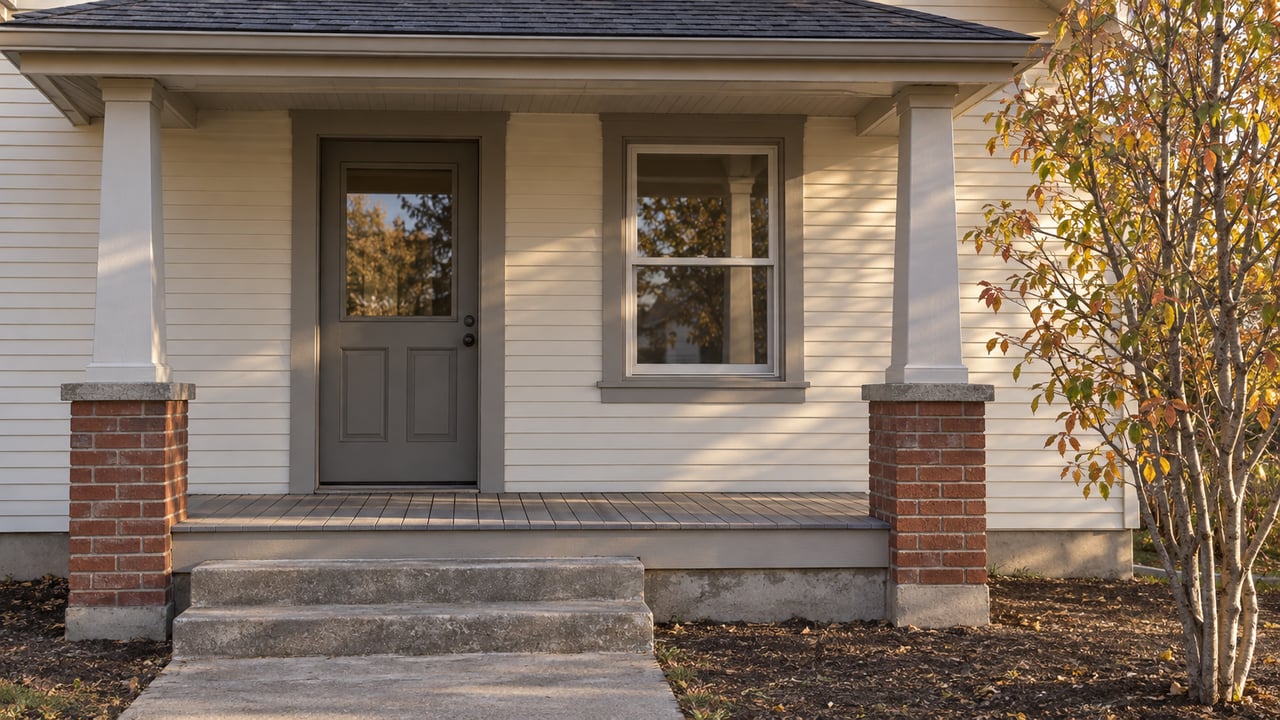
In Golden's Historic Districts, One New Rule Undoes the Paperwork of Another
October 1, 2026
October 1, 2026
In July 2026, the owner of a house on 18th Street in Golden's East Street Historic District found herself explaining exterior work to the city's Historic Preservation Board after the fact. She had not realized the board needed to sign off before the changes were made, not after. The house is what the city calls a non-contributing structure inside the district, meaning it does not itself carry historic designation, but its address does. That distinction is exactly the kind of thing a buyer discovers only once it becomes a problem.
That case, filed as HPB item 412 18th Street and reviewed at the board's July 8, 2026 meeting, is a small story. But it points at a larger one that anyone closing on an older home in Golden this fall should understand. Two separate regulatory systems now govern what you can do to a house in this town, and they pull in opposite directions on the exact properties everyone assumes are the most restricted.
Golden has three locally designated historic districts: the 8th and 9th Street District, the 12th Street District, and the East Street District. The 12th Street District has carried this status the longest, designated in 1983 as Golden's first section listed on the National Register of Historic Places. Any exterior alteration, addition, or new structure inside these districts, or on an individually designated site, generally needs a Certificate of Appropriateness before work begins, not after.
The Historic Preservation Board meets the second Wednesday of each month, and its recent agenda reads like a running log of what actually gets built and torn down on these streets. A rear addition at 1815 East Street went through review in February 2025. An addition to a stone barn at 815 Cheyenne Street was reviewed in June 2025, with the barn treated as a separate address from the main house at 920 9th Street on the same parcel. A new building at 2200 Ford Street cleared the same June 2025 meeting. A small addition on the southwest side of a house at 515 17th Street was reviewed back in October 2024. By July 2026, the board was also tracking a planned demolition at 612 10th Street.
None of this costs anything if the work is a standard Certificate of Appropriateness for compatibility. Demolition is different. A Certificate of Appropriateness for demolition carries a $500 application fee and requires a letter of intent, an existing conditions report with a professional structural assessment, current photographs, and historical documentation of the site. That is a real line item to budget for before a teardown-and-rebuild plan gets anywhere near a building permit.
At the same time the Historic Preservation Board has been working through its monthly docket, a second and unrelated framework has been landing on Golden properties: the statewide Colorado Wildfire Resiliency Code, which reached full local enforcement on July 1, 2026. The code sets structure-hardening standards for homes inside a mapped Wildland-Urban Interface zone, and Golden has adopted its own version of that map this year, layered onto the state's minimum standard.
The trigger for the wildfire code is specific. It generally applies to new construction, additions over roughly 500 square feet, or renovations that replace about 25 percent or more of a structure's exterior surface, such as a full roof tear-off. It is not retroactive, so an untouched older home does not have to retrofit simply because the code now exists.
Here is where the two systems actually diverge, and where the story stops being generic.
| Historic District COA Review | Colorado Wildfire Resiliency Code | |
|---|---|---|
| Applies to | Exterior work on designated or contributing structures in Golden's three named districts | New construction and significant alterations inside Golden's mapped WUI zone |
| Reviewed by | Golden's Historic Preservation Board, second Wednesday monthly | City building department, under standards from the state Wildfire Resiliency Code Board |
| Typical trigger | Most exterior additions, new construction, demolition | Roughly 25 percent or more exterior replacement, or additions over about 500 square feet |
| Cost | No fee for compatibility review; $500 for demolition review | Folded into standard building permit review |
| Historic-structure treatment | This is the process that applies | Repairs to historic structures are exempted from the code's structure-hardening requirements |
That last row is the reversal worth sitting with. A homeowner assembling a renovation budget for a house inside one of Golden's historic districts is not stacking two mandates on top of each other. The Historic Preservation Board still has to approve the exterior work on its own architectural terms, but the wildfire code's material-hardening requirements, the part that can add real cost to roofing, siding, and window assemblies elsewhere in Golden, do not attach to repairs on a historic structure the same way. The house that looks the most regulated on paper is, in this one specific respect, carrying less new financial exposure from the code that just took effect this year than a comparable non-historic home two blocks away.
There is a second shift worth knowing about before you close, because it changes what owning inside one of these districts might mean a year from now.
Golden has spent much of 2026 rewriting Chapter 18.58 of its municipal code, the chapter that governs historic preservation, under an initiative the city calls Past Forward. A draft ordinance reviewed in February 2026, Ordinance No. 2288, would create something that has not existed before: a process for a property owner to petition for removal from a historic district after it has already been formed. The draft is explicit that this is not an opt-out at the owner's discretion. Instead it lists specific criteria tied to the same designation standards used to form a district in the first place, and any request would still need to go through the same kind of board and council review that created the district to begin with.
The city ran a community engagement process on companion architectural guidelines through this past spring and summer, and that input could still produce further revisions to the ordinance. City Council review of the current draft is expected before the end of 2026. None of this is finalized. But if you are buying into the East Street, 12th Street, or 8th and 9th Street district right now, you are buying into a set of rules that the city itself is actively revising, with the review calendar landing later this same year.
If you are under contract on an older home in Golden, or already own one and are planning exterior work, three things are worth confirming before a contractor's bid becomes a commitment.
First, confirm whether the address sits inside one of the three named districts or carries an individual designation, and whether it is listed as contributing or non-contributing. The 412 18th Street case shows that non-contributing status inside a district still triggers board review, it just doesn't feel that way until the board tells you otherwise.
Second, check the city's current WUI map for the parcel before assuming a roof or siding project will or will not trigger the wildfire code. The 25 percent threshold applies to the surface area of the work, not the age of the house, and the historic exemption only covers repairs to structures that already carry designation.
Third, if a full teardown is part of the plan, price in the $500 demolition COA fee and the cost of the required structural conditions report as part of due diligence, not as a surprise after the offer is accepted.
Does historic designation affect what I can insure the house for? Designation itself is a land use and architectural review question, separate from how an insurer prices the policy. That determination sits with your carrier, not the Historic Preservation Board.
Can I still get financial incentives for renovating a designated property? Federal and state tax law provides incentives for historic preservation projects that follow the Secretary of the Interior's Standards for Rehabilitation, administered through History Colorado. Whether a specific project qualifies is a conversation with that program directly.
What if my house is over 50 years old but I'm not sure it's in a district? Age alone does not confirm designation. The city's Local Register of Historic Sites and Districts lists both contributing and non-contributing structures, and confirming status before assuming either freedom or restriction is the step that keeps a renovation timeline intact.
If you are weighing a purchase in one of these districts, or sitting on one already and wondering what a renovation actually requires before you list, Zaida Nunez can walk through what a specific address is currently classified as, what that means for a pre-listing project, and what the city's own review calendar looks like this fall.



At Montagne Properties, our mission is simple: to help you find the perfect place to call home in Colorado. We approach every client with a deep understanding of what makes Colorado unique, and we use our expertise to guide you through the real estate journey with confidence and ease.